
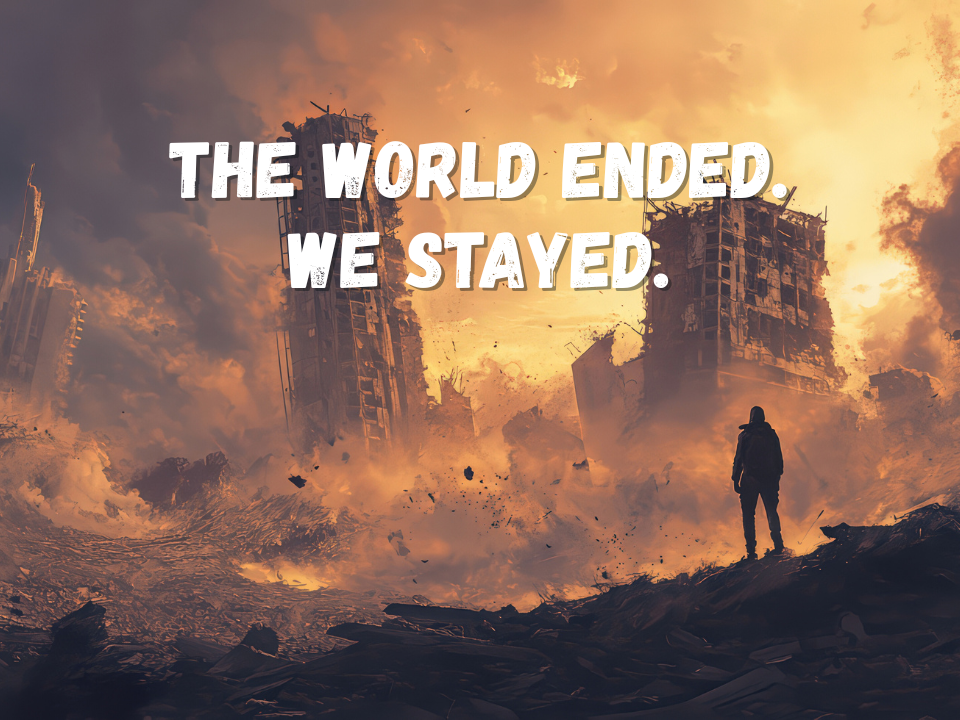
Post-apocalyptic horror isn’t about the outbreak… it’s about what comes after. The silence. The isolation. The slow realization that the world you knew is gone, and survival doesn’t always mean hope.
These films focus less on jump scares and more on atmosphere, moral collapse, and the psychological toll of living in a broken world.
A Quiet Place (2018)
Silence becomes survival. A Quiet Place turns sound into a weapon and uses restraint to build relentless tension. It’s intimate, quiet, and deeply unsettling – proof that apocalypse horror doesn’t need nonstop chaos to be terrifying.
And the rest of the series is absolutely worth including too.
A Quiet Place Part II (2021)
The world gets bigger in the sequel, but the danger is just as immediate. The Abbott family is forced beyond the relative safety of home and into a much harsher version of what’s left of society. It keeps the same tension around sound while showing more of how other survivors are coping after the collapse.
A Quiet Place: Day One (2024)
Instead of focusing on survival years later, Day One takes us back to the beginning of the invasion in New York City. Watching a crowded city suddenly realize that sound means death gives the apocalypse a totally different kind of panic. It’s more chaotic than the first two films, but still grounded in very personal survival.
I Am Legend (2007)
A haunting look at loneliness after the end of humanity. Empty streets, abandoned cities, and the creeping sense that survival might be worse than death. Even when danger appears, the real horror is isolation.
28 Days Later (2002)
Fast-moving infection, empty cities, and a raw sense of panic. 28 Days Later helped redefine modern apocalypse horror by focusing on how quickly everything can fall apart and how thin the line between civilization and chaos really is.
And honestly, the whole series belongs on this list.
28 Weeks Later (2007)
Set six months after the original outbreak, 28 Weeks Later shows what happens when people actually try to rebuild after everything has collapsed… and how quickly that can go horribly wrong. It’s bigger, more chaotic, and much more relentless than the first movie, with some seriously memorable outbreak scenes.
28 Years Later (2025)
Almost three decades after the Rage Virus first escaped, survivors have learned to live in a world permanently changed by the infected. This one brings the series back to its eerie, unsettling roots while showing just how strange both the infected — and humanity — have become after decades of isolation.
28 Years Later: The Bone Temple (2026)
Picking up directly after 28 Years Later, The Bone Temple pushes the series even further into the idea that the infected may not actually be the scariest thing left in this world. Survival has created its own monsters, and the human side of the apocalypse becomes just as disturbing as the Rage Virus itself.
This one might be my fave in the series!
World War Z (2013)
Global in scale and relentless in pace, this one leans more action-horror but still captures the overwhelming panic of worldwide collapse. The speed and scope make it feel less personal and more terrifying in a different way.
Bird Box (2018)
You don’t see the monsters… and that’s the point. Fear becomes psychological, internal, and constant. The apocalypse here is invisible, which makes trust and survival even more fragile.
Snowpiercer (2013)
The world has ended, but humanity keeps going… trapped, divided, and brutal. Set almost entirely on a moving train, this film explores class, control, and the cost of survival in a frozen wasteland.
The Road (2009)
Bleak, quiet, and devastating. This is post-apocalyptic horror at its most stripped down. No spectacle. No hope. Just survival, love, and the question of whether humanity deserves to continue.
Azrael (2024)
Stripped-down, savage, and almost wordless, Azrael leans hard into primal survival horror. Violence is sudden, the world is cruel, and meaning feels long gone — making it one of the most unsettling recent apocalypse entries.
Year 10 (2024)
Set a decade after societal collapse, this grim, grounded film focuses on scarcity, brutality, and the normalization of violence. It feels raw and uncomfortably plausible, with no interest in offering comfort or hope.
Post-apocalyptic horror sticks with us because it’s not only about monsters but also about people… how quickly things fall apart, and what survival really costs. These are the stories that don’t end when the world does.
Did I miss one that belongs here? Let me know in the comments!
Leave a Reply